
Inside smart working
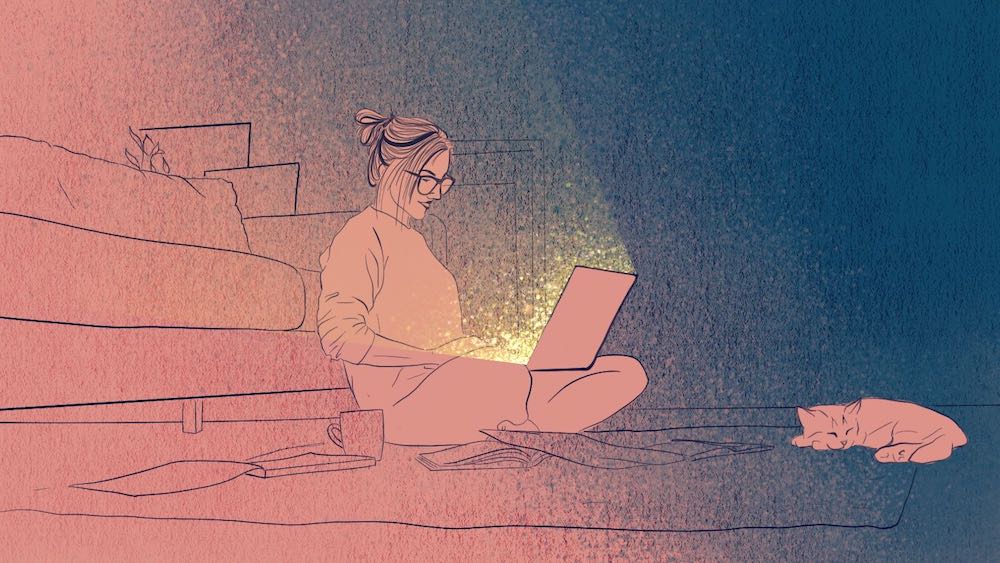
We are living through a period of history that has set off an evolution of work that dissolves walls and brings new challenges. But remote work is not just made of tools and platforms which, of course, are essential to keep everything running smoothly; it is made of relationships, of communication, of a close-knit team.
Already trained in agile ways of working, and used to communication and sharing tools, we went through a painless switch to full remote, and it was so fast that we barely noticed: in no time at all our flat had turned into our office. Needless to say, the spirit in which we are working now cannot be the same as always.
But… the truth? We discovered that we manage to do more, more efficiently, and to stay constantly aligned despite the distance. The relationships of trust built within the walls of Interlogica have helped all of us reach goals together that let us keep creating value, for ourselves and for others. It is not always easy: our emotions have been through a very high-speed spin cycle, and we miss our colleagues, the laughs, the jokes, the coffee break.
Here we are: this is us, some of us, each with their own experience and their own daily life.
MATTEO MONTAGNER
Project Manager
I have been trying out so-called “smart working” for almost four weeks now, weeks in which I can wake up and crack the joke “Right then, I’m off to work!” while pointing from the bedroom at the living-room table a few metres away, where one or two furry assistants are waiting for me next to the PC (I have two cats).
One of the most important things I have understood is that smart working does not just mean working from home with enabling technologies: the network connection, the software and the technologies are the base of the Maslow pyramid of this new way of working.
Smart working is a bit like a game of Battleship, with video calls and company chats, but technology does not let you see everything that is really going on behind the screen of your laptop, and it certainly requires developing a new set of soft and hard skills: a virtual world in which using the full range of emotions that emoji can convey is probably more important than personal hygiene… although, for the sake of mental order, I still recommend taking showers and putting on a shirt every now and then ;-).
Learning to work remotely means, in many ways, re-learning how to work: changing your mindset, changing your approach radically. Until the 1950s there were people, known as “knocker-uppers”, whose job was to knock on doors and windows to wake people up in the morning. At first alarm clocks were expensive, but when they became cheaper and more reliable this job died out.
The knocker-uppers were not replaced by a machine that knocked on windows. Embracing smart working, really letting it into our lives, means understanding the times we live in and the changes they bring.
ALESSANDRA SCOMPARIN
HR Consultant
Me, Orione and Covid-19.
Let me introduce Orione. No, not the constellation. Orione is the garden of the building I live in. It took Covid-19 and forced remote working for me to notice it.
After all, competing with the Restera has always been a lost battle for Orione.
Anyone who lives in Treviso knows what I am talking about. The Restera is an oasis for runners, cyclists, walkers and anyone who loves being outdoors in any season. Nothing comes close: no park, public or private garden like Orione can match the long path that runs from Treviso all the way to the gates of Jesolo along the river Sile. The Restera is like the Marca Trevigiana: see it and you fall in love. But like the Marca, these days the Restera is off limits too.
And then, as if by magic, Orione reappears: the garden that the other residents and I snubbed for 17 years. Boldly ignored, even though we paid for its upkeep. After all, there was the Restera. Today we realise it is a resource, a precious corner of paradise, a refuge in difficult times we do not know when we will come out of. A regenerator of thoughts and a battery charger. And, a little embarrassed, we admit we are lucky: some people do not even have a balcony to step out on. We have 1,200 square metres. Not bad at all.
And that is how I fill the breaks between one video call and the next. On the sunny afternoons of a spring that has bloomed early, I take a break, put on my running shoes and go down the stairs. Orione is waiting for me.
MAURO BOMPADRE
Product Owner
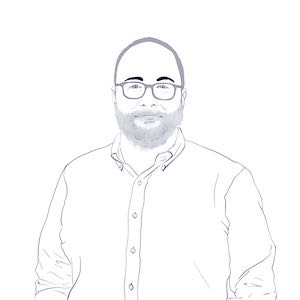
After talking about it often, sometimes off the top of our heads, we have all been working remotely for a while now. How am I experiencing it? First of all, let’s say that we are mostly under house arrest 🙂 and that in general smart working does not mean “working from home”. It means making working time more productive and less stressful by freeing it from geography, from the classic “nine to five”, and by tying productivity to goals and value rather than to time spent on a chair.
Personally I have noticed that we work much more and better. This is probably because I work for an ICT services company, so I have my “production plant” available anywhere on my laptop. Some downsides are the lack of personal contact with colleagues (working life is made of that too) and, at times, group work sessions (especially analysis and brainstorming); some ways of working should happen in a room in front of a whiteboard, physically present: in short, under ideal conditions, a conversation “in person” can never be completely replaced by virtual collaboration.
All in all, I think the model has now established itself for good as the most effective, at least for high-value-added service companies, and personally I would like to carry on like this, splitting working time into 40% remote and 60% in the office.
This probably means a little overhead for new metrics and coordination tools: all things considered, a small price to pay for an increase in productivity that, especially for software development teams, is undeniable.
One last note: I would be curious to check PM10 levels in our cities these weeks. I think it would confirm that by adopting “smart” individual ways of living and working we would help, without too much effort, to solve epoch-making problems such as pollution.
One very last note: buzzwords… when we talk about “smart working” we use an anglicism that stands in for an unclear concept, and that is never a good sign. We will know we are working smartly when “I’m smart working” is replaced simply by “I’m working”.
FULVIO ALESSIO
Senior Software Analyst and Developer
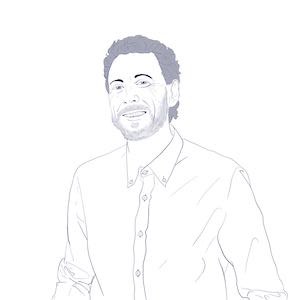
Who would have thought it!
Shut in at home, me of all people, who never missed a Sunday hiking in the mountains in the fresh air!
So what now? Roll up your sleeves and turn the day upside down!
No car, no train, no bike: you move from one room to another and you are ready to work.
Luckily my company is already set up for remote working; I had tried it several times and I was not caught unprepared.
My team is already spread out, so the switch from office to home was less traumatic than expected. Of course, I miss human contact, the face-to-face exchange that sparks ideas… But the various chats make up for that too, and agile practices help keep the team up to date and always on the ball.
Hoping that everything goes back to how it was, better than before, I can only thank the company for its vision of the future, always “a few steps ahead”, which let us reorganise in less than a day.
Never give up!
EVA MARINELLO
CFO
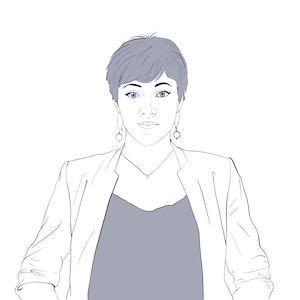
A sunny day.
My remote working, on the first day of the nationwide lockdown in Italy, was a completely out-of-the-ordinary experience.
I had been away from home, and out of my region, for several days, in a wonderful remote corner of the Tuscan-Romagnol Apennines. A very special place, built of stone and surrounded by woods and streams, where, besides the sound of water and wind, you hear the rooster waking you up, the dog guarding its home, the donkey and the horses clearing their throats in the pasture.
So that morning I got to work with my PC and a few hot work issues on the table, almost like any other day, except that next to me I found some new colleagues: a girl in her first year of high school following an English lesson by video call, and a middle-school girl doing her grammar homework in her exercise book. Suddenly I was back a few years, in the middle of the dynamics between students and teachers, oral tests and homework to hand in.
While I was discussing figures and contracts on a conference call, I noticed how hard it was for the teachers to manage a class of students remotely, and the goodwill that both sides put in to get past the limits of the various systems they used (from the electronic register to video-conferencing platforms with no hierarchy, to messaging apps).
Time flew as it does in the office: a continuous stream of calls, chats and emails, without even the ritual of the coffee break.
The working day ended just before dinner, when the owners of the house came back exhausted after spending the day looking after the farm animals and gathering wood in the forest. They looked at me as if I were an alien, baffled that I had spent the whole day in front of a bright screen without enjoying the sunshine.
After that busy Monday, in the normal course of things, I would have gone home tired and hungry without giving it another thought, but the unusual situation made me think.
I like my job and I do not think I could do without it; still, cutting myself off so much makes me question the meaning of this dynamic, out-of-control world that makes everyone run anxiously, losing touch and rhythm with the most beautiful thing we have: nature.
ENRICO VETTORI
Frontend Developer
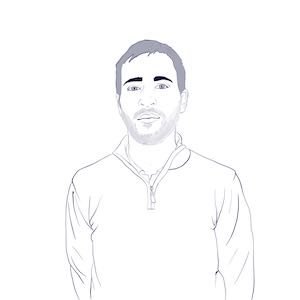
A quick premise: this is the first time in my life that I have tried remote working.
I felt a bit “disoriented” during the first two or three days of working from home: taking the car to get to work and having a coffee with others were things I took for granted during the week and, in my head, I imagined that working from home would also mean a drop in productivity.
I changed my mind: so far I have found it a mostly positive experience. There is no lack of contact with colleagues, and teamwork goes on as if we were in the office.
What I miss most is the “physical” contact with colleagues: being able to walk over and ask for information or help, and also the jokes that lighten the work.
BARBARA CALDERAZZO
Digital Marketing and Communication Specialist
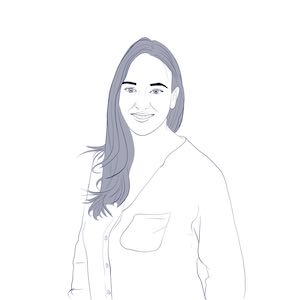
Home Working Mama is back!
Alarm an hour later, breakfast with Leo, my little one who is growing at the speed of light, a goodbye and off I “go out” to work.
That’s right: even though I am working from home, I go out to go to work!
I go out of the front door, climb two flights of stairs and enter my office, welcomed by silence and sunlight.
Mine is a return to an experience I have already lived, but this one tastes very different: the sweet taste of being able to wake up with my baby and get him to sleep in my arms in the afternoon, the happiness of avoiding a good four hours of travel to and from the office; all mixed with the slightly bitter taste of working alone, which has the upside of making you appreciate the company of your crazy colleagues even more. Honestly, I did not think I could miss the office this much, but I do.
As for how we organise our activities, working from home is nothing new for my team, because for at least a couple of years one of us, in turn, has been joining by video. We are well practised and find it easy to slip into video daily sprints, video sprint planning and video meetings, or to stay aligned on chat for feedback or to share ideas.
We are physically apart, but we travel in unison towards the same goal.
GIANMARCO NALIN
Full Stack Developer
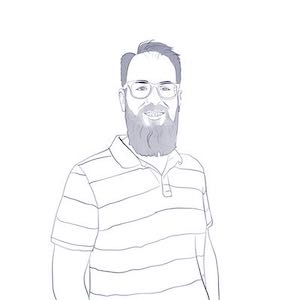
The start of “forced” remote working did not catch me unprepared: I had already had the chance to use it on other occasions and in other contexts. Its length, however, could turn out to be a challenge: social animals that we are, we miss contact with the people we usually have a coffee with, maybe swapping the latest news while still half asleep.
Even so, the bonds hold and grow stronger thanks to discussion calls, coffee meets and chats, helping the teams grow, both organisationally and in their relationships.
My experience can best be described by answering a few simple questions: would you do it again? Absolutely yes; for such a long period? Absolutely not.
I never thought I would say it but, deep down, I miss the office.
ILARIA BELLIO
Accountant
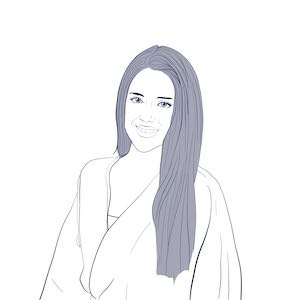
It was 9:30 pm on Saturday 7 March 2020 when the province of Venice was declared a RED ZONE and everything stopped: “Bars, pubs and restaurants closed, only some essential services open, agile working recommended”.
That same day and the next, Interlogica’s office stayed open so that all of us could pick up the extra equipment we needed to work from home in the days to come.
Because, luckily, at Interlogica we had already been experimenting with SMART WORKING for some time.
My experience.
I am part of the Finance Team, together with two other colleagues, Eva and Martina, and come to think of it, talking about remote working in this field may sound like a paradox. Needless to say, some jobs are better suited to it than others. Ours is certainly not a “digital native” job.
It is exactly as you would imagine: a big cupboard crammed with paper files and desks flooded with documents.
So, to get organised as well as possible, we spent the first two days of the following week in the office collecting everything we needed, and then #EVERYONEHOME.
And here I am after many days of isolation, almost getting used to it.
The alarm goes off later and the pace slows down.
I have breakfast and, after feeding my faithful lockdown companion (Noah, my kitten), still in my pyjamas and with messy hair, I switch on the PC and start working.
Time goes by quickly, the to-do list is always full and, thanks to today’s technology, whenever needed it takes a few seconds to create a “virtual office”, almost bringing colleagues into your home by video call.
Personal thoughts.
Needless to say, there are many thoughts and worries today. Infections are rising day after day, many people are on temporary lay-off schemes, many shops are forced to close, markets are crashing: in short, how will we get through this? When will it all end? I do not think anyone has the answer, because the most important battle is to save TODAY, day by day, and to prepare for what is to come.
ALBERTO BIANCHI
Data Scientist
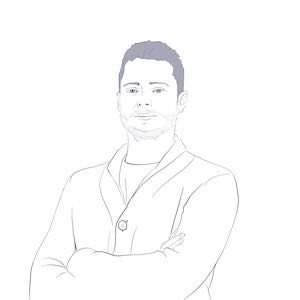
Smart working (also known as “oh, so you can work from home?”).
New jobs, new methods. Except that neither my job nor the method is new. As a Data Scientist, my job is to analyse data to extract useful information from it. My profession took shape in the last century and was defined more rigorously some twenty years ago. As for working from home, Finland has been ahead of us since the mid-1990s.
Still, although the usual replies to my job title are “Eh?” or “So, what do you actually do?”, after a few more questions the response is: “So you could work from home too?”.
Yes indeed, and so could most of my colleagues; in fact the world is full of websites offering remote IT jobs.
But what does a day in the office look like, and what does one at home look like?
Let’s start with the office. Leaving aside the commute (three hours a day in my case), the day goes more or less like this: the team meets to review the results reached the day before and to decide where to put its effort that day. Once aligned (which does not always happen, because the tasks are already defined), everyone sits at their computer and works. We talk to the team when in doubt, but much of the work is “solitary”, partly because our team can often work on the same problem from different angles, which in practice makes it possible to work in parallel.
And from home? Well, little changes. Let’s be clear… It was probably easier for me than for others. On the one hand, Interlogica has always had in its DNA the drive to innovate and the mental flexibility needed for a leap like this. On the other, and this is about infrastructure, having access to a very good home connection certainly made all this possible without effort.
The fact is that my typical day has not changed. Same alignment, same individual work and same moment of discussion. Of course you do not look up from your monitor to talk to the colleague next to you, but it is enough to press a button in a private conversation with someone and you are face to face. Thanks to our system administrators, we can also use Interlogica’s resources as if we were in the office: our team has a compute server that we can reach from remote without any problem through a VPN.
In these weeks we have also held two job interviews, remotely too. The candidates were young and did not suffer from the meeting being fully digital. The virtual interview room hosted up to five people at the same time and we never had any problems during the meetings.
So, can I work from home? The answer is yes, no problem at all! But I would not keep it as the only way of working, because the atmosphere at Interlogica is always cheerful and in the long run you miss the office a little. That said, I believe half a week of remote working can only be an added value for employees: less stress and more productivity.
MARTINA DE PIERI
Accountant
Strange, isn’t it?!
It seems almost unreal to be forced to stay at home, with only the odd chance to go out of these four walls: the same walls we long for so much in a “normal” period of our lives, but which now feel almost too tight.
At the start of the restrictions it seemed a fantasy that our office, the administration, could work from home… and that world of papers and paperwork could become completely virtual (or mostly, at least).
Paradoxically, we made it: it was great teamwork between Eva, Ilaria and me. We gathered everything we needed and recovered as much as possible, with one eye on the tax deadlines coming up and those further ahead. We organised ourselves with daily calls, with the chance to “see” each other thanks to the tools we have, and not everyone is lucky enough to have them.
We will have to grit our teeth a little longer, and it will not be easy. Remote working has, yes, given my life (and my colleagues’ too, I imagine) an almost calmer rhythm, letting us savour moments we usually live in a frenzy, while meeting every obligation our work requires with the utmost commitment; but at times it makes us lose touch with the real world. I miss the background chatter and the exchange of small talk and jokes that make an office alive.
What will happen in the coming weeks? I hope infections go down, and I will do my part by continuing to work from home, because I want to help contain this dramatic situation.
We know only too well that what we are doing is nothing more than a drop in the ocean. But if the drop were not there, the ocean would be missing something, as Mother Teresa of Calcutta said.
GIANLUCA SCACCO
Web Application Developer
So, what about the quarantine? Tell us about the quarantine.
All right.
It has been two weeks of quarantine by my count, but I might be wrong, because time passes differently under forced confinement: Fernando and I know that well.
Maybe I should carve notches in the wall to keep track of the days, but I think Fernando would be quite offended.
Fernando grumbles and insists on going out, but we can’t, we just can’t!
I must say my day goes by quite quickly, because with remote working (hold on tight, really tight) not much has changed compared to before.
Fernando has just pulled a face and muttered something; maybe he thinks I am too optimistic, who knows.
He wants some fresh air and to roll around on the grass in the park. Oh yes, well done Fernando, and then we end up rolling into intensive care: great idea.
The company had already been experimenting with remote working for quite some time, so for me it is not new at all. Our team keeps working on the project; there is a certain degree of uncertainty, of course, but let’s say it is almost as if nothing had happened.
Almost, of course.
From a work point of view I am already well practised at working from home (apart from when the neighbours put on some Pavarotti aria at stadium volume), while from a human point of view, being stuck at home all these days is clearly rather harmful.
I am starting to think about what life out there used to be like: great graphics and special effects, but the plot left something to be desired.
Anyway, I am lucky, because all in all Fernando does not bother me much; he is just a bit restless because he is the type who loves being outdoors, feeling the rain on his face and that sort of thing. Go figure.
In quarantine it is quite easy to keep myself busy:
- the work routine;
- the eight thousand hours on Netflix (try watching three seasons of Narcos in a week, then let’s see if you don’t speak the rough Spanish of drug traffickers);
- furious electric bass sessions (with headphones and a cable that, past a certain length, yanks you back);
- improv theatre lessons by video call (wonderful, despite the medium).
In short, this mix keeps me sane and positive.
And if all this technology were not enough… there will always be Fernando’s voice in my head to keep me company: just don’t listen to him too much.
SIMONE RANZATO
Software Developer
Pandemic.
It seems an event like this was needed to move and shake up the world, to call a good many things into question.
Good heavens, let’s be clear: we would probably have gladly done without it, given the heavy toll it is taking worldwide. But I try to see the glass half full, with whatever good it may have brought.
It all began, at least for me, on 24 February: we are now in the fifth week in a row of working from home, apart from two quick trips to the office to pick up various things.
Working days in a “love & hate” mix, immersed in what some call “smart working”.
Its philosophy is to rethink, in a smart (that is, intelligent) way, how work gets done, in terms of hours, place and so on.
This emergency has pushed many companies to relocate their office workstations, to make in a great hurry the leap towards “working elsewhere”, within a system that is still rigid and old-fashioned on the subject. A necessary step towards what will be truly smart work.
For now, in practice, there is not much that is “smart” about it; but Interlogica’s “smart” speed of action deserves real praise: it did not think twice about providing availability, tools and the means to make it happen.
But back to us: working from home.
It is actually great that my alarm now goes off almost two hours later.
It is great that the morning traffic is now just a distant (if still vivid) memory, because luckily the “bedroom-kitchen-desk” route is a quiet one.
It is great that every activity can be done comfortably from home too. This shows us that the office, as a container, is not as essential as we thought, after all, because the tools to hear each other, see each other and work together are there and they are more than good enough.
There is, however, another side to the coin. The price to pay is not small: human contact suffers.
The exchange of jokes that makes you feel less alone; the chat over yet another coffee; solving a problem side by side, four hands on the keyboard.
This path is certainly interesting, and hopefully one to follow and adopt even when this health emergency is over. The real benefits cannot be underestimated, especially the environmental impact, thinking on a large scale.
Even so, in all honesty, I hope that in future such long stretches of “smart working” can be avoided, because in my view they are too alienating.
Did you like this article? Read also:
People Team’s 5 senses + 2
Confessions of a budding Agile marketer
Agile – the hitchhiker’s guide to the galaxy
Translated in October 2026 from the Italian original of 24 March 2020. The people quoted told their experience at the time, with the roles they held then.